
In today’s digital world, social media marketing has become one of the most effective ways to promote a business, connect with customers, and increase sales. Millions of people use platforms like Facebook, Instagram, LinkedIn, X (formerly Twitter), Pinterest, and YouTube every day. This gives businesses a great opportunity to reach their target audience where they spend most of their time.
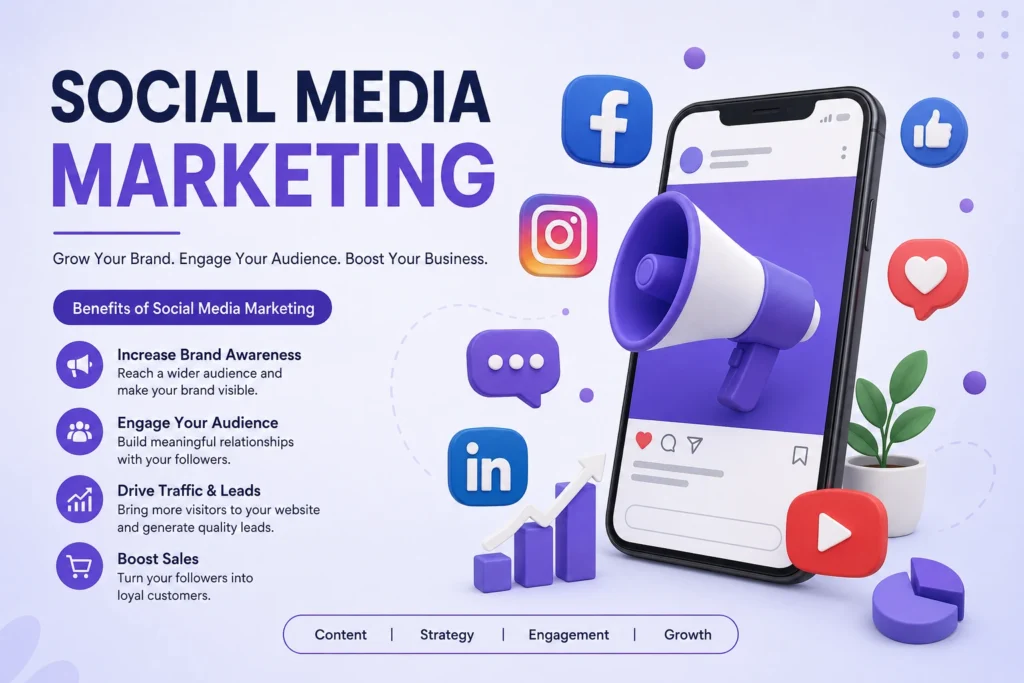
Whether you run a small business, an online store, or a large company, social media marketing can help you build brand awareness, generate leads, increase website traffic, and improve customer relationships. With the right strategy, even a small business can compete with larger brands.
In this complete guide, you will learn what social media marketing is, why it is important, its benefits, popular platforms, effective strategies, tools, trends, and frequently asked questions.
What is Social Media Marketing?
Social Media Marketing (SMM) is the process of using social media platforms to promote products, services, or brands. It involves creating valuable content, engaging with followers, running advertisements, and analyzing results to achieve marketing goals.
Unlike traditional advertising, social media marketing allows businesses to communicate directly with customers, receive instant feedback, and build long-term relationships.
Example
A clothing brand can:
- Share product photos on Instagram.
- Upload styling videos on YouTube.
- Run Facebook Ads to reach new customers.
- Use LinkedIn to connect with business partners.
- Post customer testimonials to build trust.
All these activities are part of social media marketing.
Why is Social Media Marketing Important?
Social media has transformed how people discover products and interact with brands. Customers now expect businesses to have an active online presence.
Here are some reasons why social media marketing is essential:
- Increases brand visibility
- Reaches a larger audience
- Builds customer trust
- Generates qualified leads
- Boosts website traffic
- Improves customer support
- Increases sales and revenue
- Strengthens brand loyalty
- Provides valuable customer insights
- Offers cost-effective advertising
Businesses that consistently provide helpful and engaging content often build stronger relationships with their audience over time.
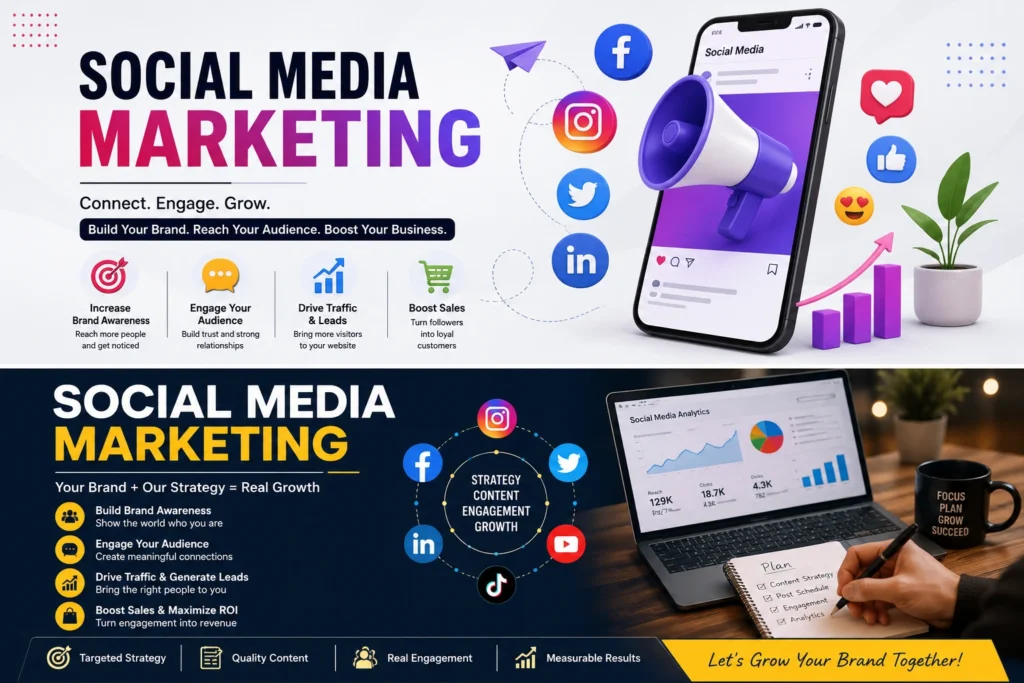
Benefits of Social Media Marketing
1. Increased Brand Awareness
Regular posting helps more people discover your business. The more your audience sees your content, the more familiar they become with your brand.
2. Better Customer Engagement
Social media enables businesses to interact directly with customers through:
- Comments
- Messages
- Polls
- Stories
- Live videos
This two-way communication creates stronger customer relationships.
3. Higher Website Traffic
Sharing blogs, products, and service pages on social media encourages users to visit your website.
Examples include:
- Blog articles
- Product pages
- Landing pages
- Contact forms
4. Lead Generation
Businesses can collect customer information using:
- Lead generation forms
- Facebook Ads
- Instagram promotions
- LinkedIn campaigns
- Website landing pages
These leads can later become paying customers.
5. Cost-Effective Marketing
Compared to traditional advertising, social media marketing is more affordable and offers better audience targeting.
Even businesses with small budgets can achieve excellent results through organic content and carefully managed paid campaigns.
6. Improved Customer Service
Customers often contact brands through social media.
Responding quickly to questions and complaints helps improve customer satisfaction and trust.
7. Increased Sales
Consistent promotion, attractive visuals, customer reviews, and special offers encourage customers to make purchasing decisions.
Popular Social Media Platforms
Facebook is suitable for almost every type of business.
Best for:
- Brand awareness
- Local businesses
- Paid advertising
- Community building
Instagram focuses on visual content.
Best for:
- Fashion
- Beauty
- Food
- Travel
- Lifestyle
- E-commerce
Popular content includes:
- Reels
- Stories
- Carousels
- Product photos
LinkedIn is the largest professional networking platform.
Best for:
- B2B marketing
- Recruitment
- Professional branding
- Corporate services
YouTube
YouTube is the world’s largest video-sharing platform.
Businesses use it for:
- Tutorials
- Product demonstrations
- Educational content
- Customer testimonials
X (Formerly Twitter)
X is useful for:
- Industry news
- Brand updates
- Customer support
- Real-time communication
Pinterest works well for businesses with visual products.
Popular industries include:
- Home decor
- Fashion
- Food
- DIY
- Wedding planning
Creating an Effective Social Media Strategy
A successful strategy begins with clear planning.
Define Your Goals
Your goals may include:
- Increasing followers
- Driving website traffic
- Generating leads
- Improving engagement
- Boosting sales
Set measurable goals so you can track progress.
Know Your Target Audience
Understand your audience’s:
- Age
- Gender
- Interests
- Location
- Buying behavior
- Online activity
The better you know your audience, the more relevant your content will be.
Choose the Right Platforms
You don’t need to be active on every platform.
Focus on the channels where your audience spends the most time.
Create Valuable Content
Quality content attracts attention and encourages interaction.
Examples include:
- Educational posts
- Tips
- Infographics
- Videos
- Customer reviews
- Case studies
- Behind-the-scenes content
- Product demonstrations
Maintain Consistency
Consistency builds trust.
Create a content calendar to plan posts in advance.
Many successful brands post several times each week while maintaining quality over quantity.
Types of Social Media Content
Different content formats help keep your audience engaged.
Educational Content
Teach your audience something useful.
Example:
“5 SEO Tips for Beginners”
Promotional Content
Highlight:
- Products
- Services
- Discounts
- New launches
Behind-the-Scenes Content
Show your workplace, team, or business process to build authenticity.
Customer Testimonials
Sharing customer success stories helps build credibility.
Videos
Short-form videos often receive high engagement.
Examples include:
- Reels
- Shorts
- Tutorials
- Product demos
Polls and Questions
Interactive content encourages audience participation and increases engagement.
Best Practices for Social Media Marketing
Follow these proven practices:
- Post consistently.
- Use high-quality images and videos.
- Write engaging captions.
- Use relevant hashtags.
- Respond to comments promptly.
- Analyze performance regularly.
- Stay updated with trends.
- Experiment with different content formats.
- Encourage user-generated content.
- Maintain a consistent brand voice.
Social Media Marketing Tools
Several tools make social media management easier.
Canva
Used for creating professional graphics and social media posts.
Meta Business Suite
Allows businesses to manage Facebook and Instagram from one dashboard.
Buffer
Helps schedule posts across multiple platforms.
Hootsuite
Offers social media management, scheduling, and analytics.
Google Analytics
Tracks website traffic coming from social media campaigns.
Later
Popular for Instagram scheduling and visual content planning.
Measuring Social Media Success
Tracking performance helps improve future campaigns.
Important metrics include:
- Reach
- Impressions
- Engagement Rate
- Likes
- Comments
- Shares
- Followers
- Click-Through Rate (CTR)
- Website Traffic
- Conversion Rate
- Return on Investment (ROI)
Review these metrics regularly to understand what works best.
Common Social Media Marketing Mistakes
Avoid these common mistakes:
- Posting without a strategy.
- Ignoring audience comments.
- Posting only promotional content.
- Using poor-quality visuals.
- Inconsistent posting.
- Not tracking analytics.
- Copying competitors without adding value.
- Ignoring current trends.
- Buying fake followers.
- Using too many irrelevant hashtags.
Future of Social Media Marketing
Social media continues to evolve rapidly.
Current trends include:
- Artificial Intelligence (AI)
- Short-form video content
- Influencer marketing
- Social commerce
- Personalized content
- Live streaming
- Augmented Reality (AR)
- Community-based marketing
Businesses that adapt to these trends are better positioned to stay competitive.
Tips for Small Businesses
If you’re just starting with social media marketing:
- Choose one or two platforms.
- Post consistently.
- Focus on providing value.
- Use attractive visuals.
- Build relationships with your audience.
- Reply to every genuine comment and message.
- Track your results.
- Learn from analytics.
- Test new content ideas.
- Be patient—growth takes time.
Conclusion
Social media marketing is one of the most powerful digital marketing strategies available today. It helps businesses increase visibility, connect with customers, generate leads, and grow sales without requiring enormous advertising budgets.
Success in social media marketing comes from understanding your audience, creating valuable content, staying consistent, and regularly analyzing your performance. As platforms and trends evolve, businesses that continue learning and adapting will be better prepared to achieve long-term growth.
Whether you are a beginner, freelancer, entrepreneur, or established business owner, investing time and effort into social media marketing can help you build a stronger online presence and create meaningful connections with your audience.
FAQs
1. What is social media marketing?
Social media marketing is the practice of promoting a business, product, or service through social media platforms to build brand awareness, engage customers, and drive business results.
2. Which social media platform is best for business?
The best platform depends on your audience. Facebook and Instagram are popular for B2C businesses, while LinkedIn is ideal for B2B marketing.
3. Is social media marketing free?
Creating organic content is free, but businesses can also invest in paid advertising to reach larger or more targeted audiences.
4. How often should I post on social media?
Aim for a consistent schedule, such as 3–5 quality posts per week, depending on the platform and your audience.
5. What type of content performs best?
Educational posts, short videos, customer testimonials, behind-the-scenes content, and engaging visuals generally perform well.
6. Can small businesses benefit from social media marketing?
Yes. Social media provides an affordable way for small businesses to reach potential customers, build trust, and grow their brand.
7. How do I measure success?
Track metrics such as reach, engagement, website traffic, leads, conversions, and return on investment (ROI).
8. What is the difference between organic and paid social media marketing?
Organic marketing uses unpaid posts to build an audience naturally, while paid marketing uses advertisements to reach targeted users more quickly.
9. Which tools are useful for social media marketing?
Popular tools include Canva, Meta Business Suite, Buffer, Hootsuite, Later, and Google Analytics.
10. Why is consistency important in social media marketing?
Regular posting helps maintain visibility, builds audience trust, and improves engagement over time.